Updated September 1, 2026. Conditions can change quickly. Check the National Park Service’s current Grand Canyon updates before traveling.
A powerful flash flood moved through Bright Angel Canyon and Phantom Ranch on August 29, damaging trails, footbridges, utilities and visitor facilities in the heart of Grand Canyon National Park. The immediate story is a human one: The Associated Press reported two deaths, one person still missing and roughly 80 people rescued as of September 1.
For anyone with an upcoming trip, the practical question is what the flooding changes. Major inner-canyon routes are closed, the Transcanyon Waterline is out of service, overnight hotel accommodations on the South Rim have been suspended and the park is asking visitors to plan around strict water restrictions.
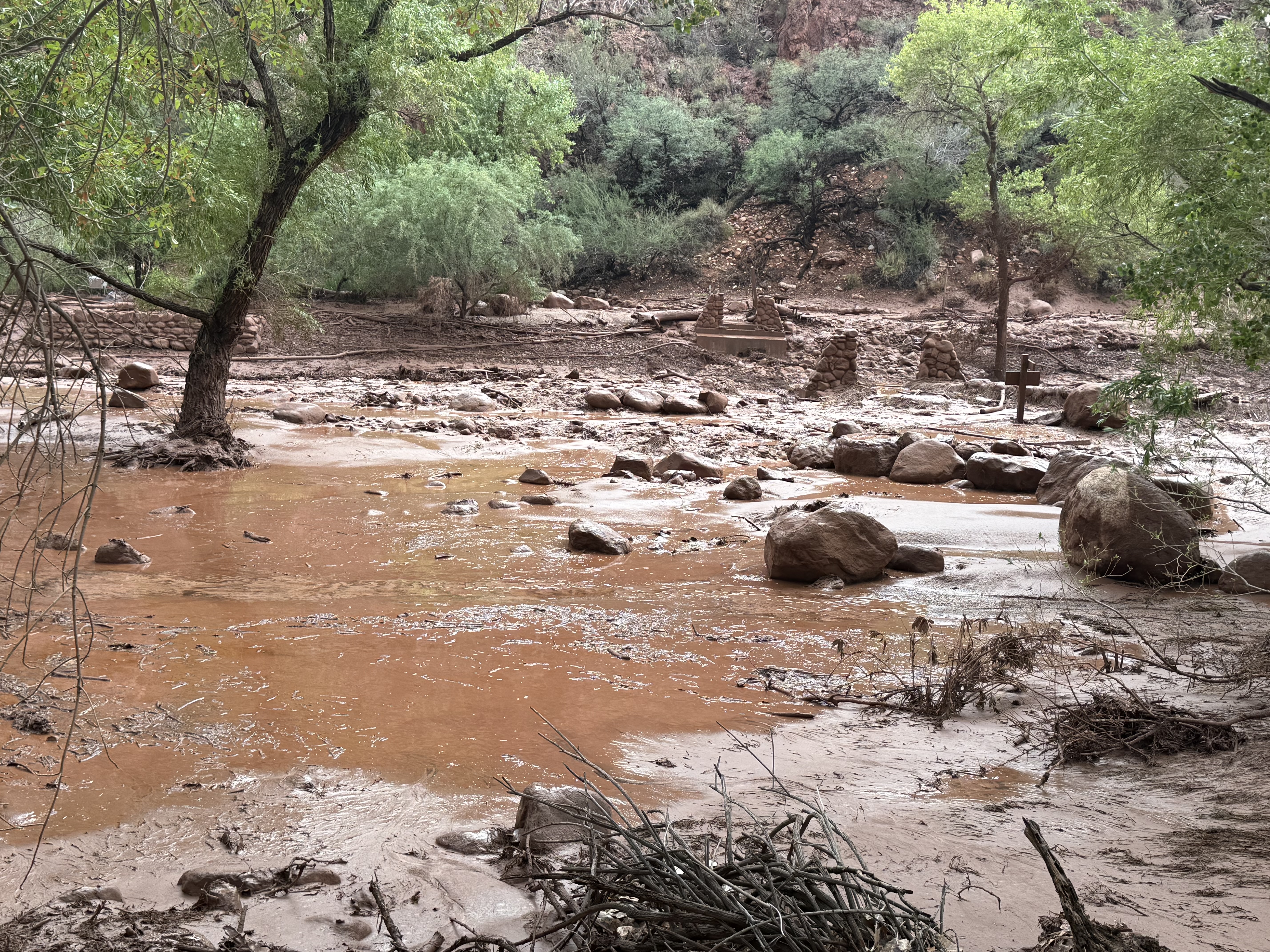
Flood damage along Bright Angel Creek after the August 29 flash flood. NPS Photo/J. Thompson.
What happened in Bright Angel Canyon
According to the National Park Service’s initial incident update, reports of flooding began around 2:30 p.m. on August 29. Water and debris moved through Bright Angel Canyon and the Phantom Ranch area, stranding visitors and forcing evacuations by helicopter.
The flood destroyed nearly all of the footbridges crossing Bright Angel Creek. It also carried trees, metal and other debris into the Colorado River and damaged portions of the park’s inner-canyon infrastructure. Those are not small repairs. Footbridges, trail access and the water system all affect how visitors, rangers and emergency crews move through the canyon.
The Park Service has not announced reopening dates for the major closures. That means older itineraries, saved maps and third-party trip guides may no longer reflect a usable route.
What is closed
The National Park Service currently lists the following closures related to the flood:
- Phantom Ranch, including the canteen, cabins and associated visitor facilities
- Bright Angel Campground
- The entire North Kaibab Trail
- Black Bridge and Silver Bridge across the Colorado River
- River access affected by debris and ongoing response work
These closures interrupt common rim-to-rim and inner-canyon itineraries. A route that looks open at one end may still be impossible to complete because a bridge, campground or connecting trail is closed farther ahead.
Do not enter a closed corridor to “see how far you can get.” Conditions below the rim are difficult to assess from the trailhead, and closures protect visitors as well as crews working in damaged areas.
South Rim lodging and water restrictions
The flood also damaged the Transcanyon Waterline, the system that supplies much of the South Rim. The park moved to Stage 4 water restrictions and announced the suspension of overnight hotel accommodations beginning August 31.
The affected overnight properties include:
- El Tovar Hotel
- Bright Angel Lodge
- Maswik Lodge
- Phantom Ranch
- Yavapai Lodge
- Trailer Village
Campgrounds are operating under dry-camping conditions. Water spigots are off, though the Park Service says bathroom faucets remain available. Wood and charcoal fires are prohibited while the restrictions are in effect.
If you have a reservation, contact the lodging operator or campground directly rather than assuming the reservation will proceed. The situation involves multiple concessioners, and cancellation or rebooking details may differ by property.
What remains open
Grand Canyon National Park has not closed entirely. The South Rim remains open for day use, and the Park Service says food and beverage services, the clinic and the post office remain available, though some operations may have reduced hours.
Some trail segments may remain accessible, but access can change as crews evaluate damage and water availability. The safest approach is to use the park’s current key messages and closure list as the starting point for any hike—not a route description written before the flood.
A day visit can still be worthwhile, especially along established South Rim overlooks and shuttle routes. The important adjustment is to treat this as a period of limited services and active recovery, not a normal visit with every trail, water source and overnight option available.
If you already have a trip planned
A few checks can prevent a long drive from turning into a dangerous or disappointing surprise:
- Confirm every reservation. Verify lodging, camping, transportation and outfitter arrangements directly.
- Rebuild your route from current information. Check each trail, bridge and campground involved in your itinerary.
- Plan conservatively for water. Do not assume a familiar spigot is operating. Carry enough water for the conditions and bring a treatment method where appropriate.
- Check conditions again on the day you travel. Closures can expand or change after new damage is found.
- Respect response areas. Rangers, trail crews and utility teams need room to work without additional avoidable rescues.
Visitors who cannot confirm a safe, legal route should postpone the inner-canyon portion of the trip. Grand Canyon will still be there after the damaged infrastructure is repaired.
Why flash flooding is so dangerous in the canyon
Flash floods are a normal desert hazard, but the canyon’s steep walls and narrow drainages can make them especially violent. The storm that creates a flood may be miles away and out of sight. Water then funnels into side canyons, carrying rocks, trees and debris with enough force to destroy bridges and reshape a creek channel.
The Park Service warns that flash floods can occur at any time, with particular concern during the summer monsoon season from July through mid-September. Its weather safety guidance recommends moving to higher ground immediately if water rises, changes color or begins carrying debris.
Never camp in a dry wash or narrow drainage. If thunder is nearby or heavy rain is falling anywhere upstream, leave low ground before the water arrives. Waiting to see the flood is not a safe way to judge whether it will reach you.
Where to check before you go
Use official sources for decisions that affect your safety and reservations:
- Grand Canyon current key messages and closures
- National Park Service flood incident release
- South Rim lodging and water-restriction update
- Grand Canyon weather dangers and flash-flood guidance
The most useful plan right now is a flexible one. The South Rim remains accessible for day visits, but inner-canyon travel requires more caution, more verification and a willingness to change course.
RECOMMENDATIONS
All About The Life designs from Texas Thread Theory, inspired by the places you go and the stories you bring back.
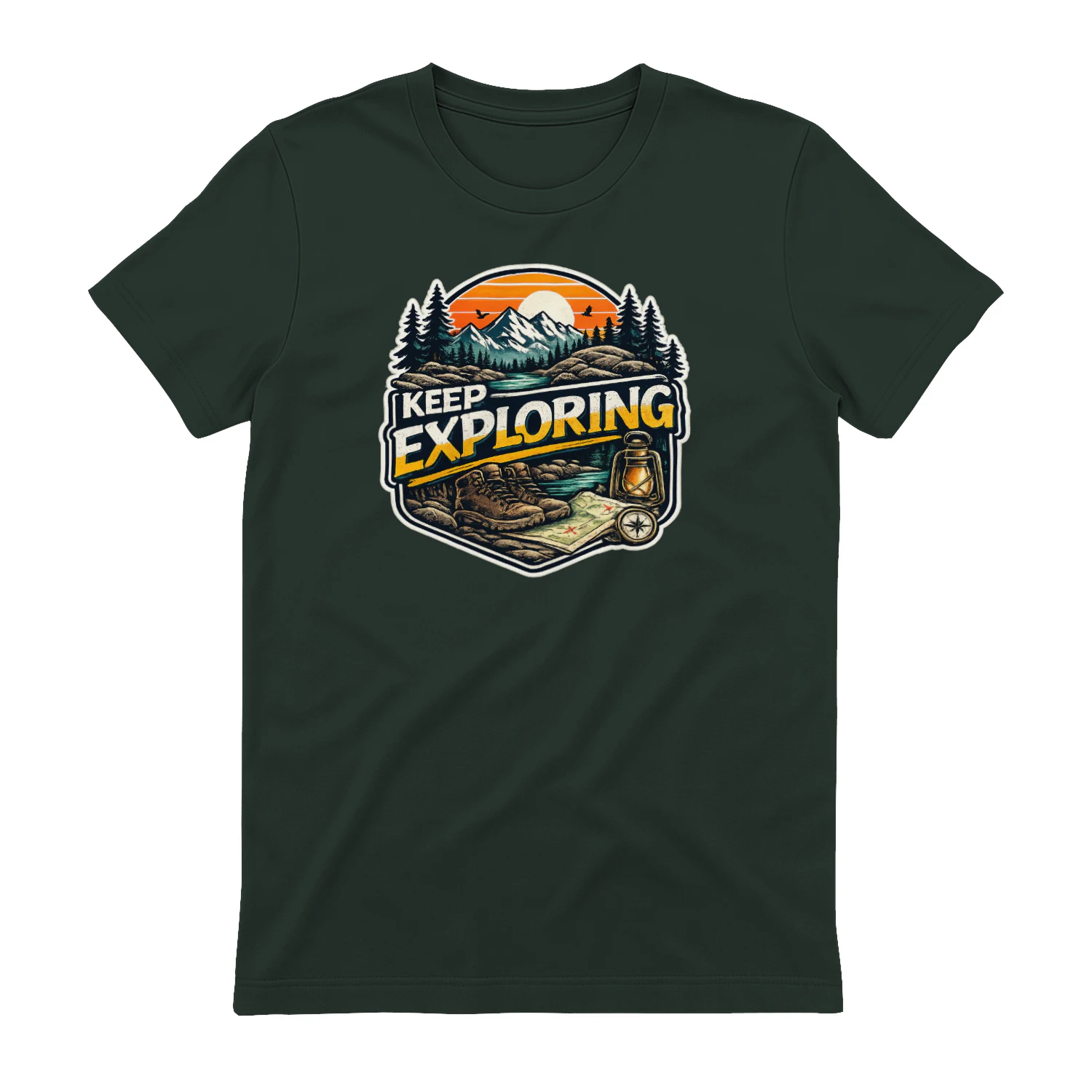
Keep Exploring Badge
A vintage outdoor badge centered on one simple message: “Keep Exploring.” With mountains, evergreens, a river, hiking boots, lantern, map, and compass details, it’s made for hikers, campers, travelers, and anyone who is always curious about what’s around the next bend.