A remote Florida hunt with a strange edge
The direct answer to what this video shows is simple: a hunting weekend near the Everglades turns into a hot, muddy, and oddly historic chase for wild boar, with an abandoned maximum security prison becoming part of the story. That unusual combination is what makes the trip stick. This is not a polished lodge hunt or a neat catch-and-cook setup. It is a crew trying to work dogs, move through rough ground, keep food going at camp, and stay flexible when the day starts throwing problems at them.
Bluegabe opens by stressing just how far from civilization they are, even while still in South Florida. That distance matters because it shapes everything that follows. There is the generator-fed camp, the long gap to the nearest store, the heat, the mosquitoes, and the constant sense that the landscape is still doing its own thing whether the crew is there or not. In that kind of place, the hunt feels less like an outing and more like a temporary occupation of wild ground.
Why the old prison changed the whole hunt
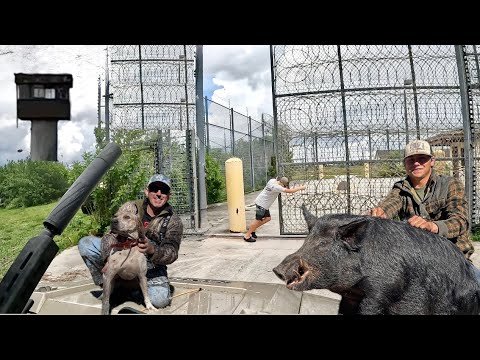
The prison is the piece that transforms the video from a standard hog hunt into something people will remember. According to the hunters in the video, wild boar were introduced on the property when the prison was operating, so if an inmate ever escaped or hid in the brush, the hogs would help make that harder. That detail gives the whole place a strange logic. The animals are not just there by accident; they are part of the prison’s old security story.
Once the crew learns that, the setting starts to feel even more unusual. They are not simply hunting near an abandoned structure. They are hunting inside the orbit of a place that once had a very specific purpose and still carries that feeling of containment and history. The video makes a point of showing the fence lines, the locked-down look of the grounds, and the prison buildings themselves. It is the kind of place where a natural Florida hunt and a human-made relic sit almost uncomfortably close together.
That is also why the boar feel different here. They are not just wild animals in a random thicket. They are the leftover result of an old system, now moving freely through a place that was designed to keep people in and keep escape impossible. The contrast is a big part of the appeal.
Dogs, water, and the kind of hog work that goes sideways fast
The hunting itself is classic hog-dog work, but the video shows how quickly that can shift from organized to chaotic. The dogs locate the boar, the crew pushes toward the action, and then the hunt turns into a pond-side scramble when one hog ends up in the water. That is where the whole thing becomes especially memorable: not because it is tidy, but because it is messy and urgent.
One of the dogs goes into the water after the hog, and the crew immediately reacts because the pond is exactly the sort of place where things can go wrong. Bluegabe notes that a gator is always a concern in that kind of water, and LOL’s dog is not a strong swimmer. The scene becomes less about the thrill of the catch and more about getting the dog out safely. That adds a real edge to the footage without the need to exaggerate it.
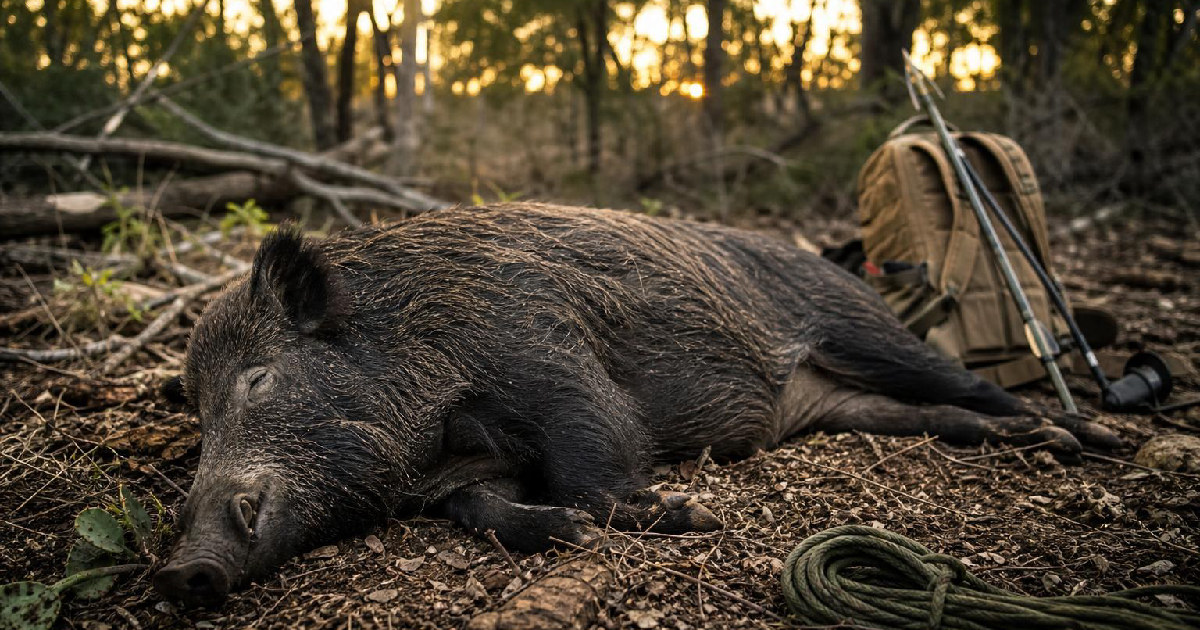
The hog itself is described as a blue boar hog, and the crew decides to cut it rather than just leave it be. In the language of the hunt, that means the animal is being castrated so it will put on weight and be useful later as meat instead of breeding. The video does not linger on the procedure, but it does make the logic clear: this is a practical hunt, shaped by the idea that not every hog is just a one-time take. Some are managed for later use.
The abandoned prison is the real character here
After the dog work slows down, the prison becomes the next chapter of the trip. The crew explores the old buildings, jokes about solitary confinement, and moves through the structure while talking about what the place must have been like when it was active. The video points out damage, bullet holes, cut bars, and prisoner artwork left on the walls. Those details are enough to give the viewer a sense of the building without turning the article into a tour guide.
What makes the prison compelling is not just its age. It is the feeling that it still has a mood. The crew treats it half like a curiosity and half like a warning. They talk about how hot it would be without air conditioning, how miserable the cells would have been, and how dangerous it would be to get trapped inside. That practical reaction is more interesting than a dramatic haunted-house angle because it stays rooted in what the place actually is: a hard, functional building that is now empty and decaying.
There is also a human layer to the exploration. The crew is not standing around trying to interpret the prison from a distance. They are walking through it with a mix of humor and caution, picking up a few odd remnants along the way, and letting the place speak for itself. That makes the abandoned prison feel like a character in the trip rather than a backdrop.
Weather, heat, and the parts of Florida that do not feel like Florida
A lot of the video’s mood comes from the conditions, not just the hunt. Bluegabe keeps circling back to how remote the area feels and how unlike a typical Florida image it is. The limestone, the cap rock, the Everglades edge, and the thick humidity all shape the experience. The ground itself is part of the story, especially when the crew talks about how Florida can sit on exposed limestone and how that changes the landscape.
The heat is another constant. The dogs tire, the hunters sweat, the side-by-side suffers a wheel-bearing problem, and rain eventually rolls in and shuts the outing down. None of that is framed as a disaster, but it does make the trip feel lived-in. The gear breaks, the weather shifts, and the plan changes. That is often what a real hunting weekend looks like, even when the setting is unusual.
There is a small but revealing moment when Bluegabe talks about being surprised that Florida can still feel this remote. That reaction helps explain why the video works. It is not just a hunt in a state people think they know. It is a reminder that some places within a familiar state can still feel isolated, rough, and strangely untouched.
What the trip says about the crew’s style of hunting
The bigger takeaway is that this group does not seem interested in making the day look neat. They are willing to hunt hard, cook in camp, joke through setbacks, and pivot when the situation changes. One hog becomes a successful morning. The prison becomes an unexpected explore. The rain becomes the reason the trip ends when it does. That loose structure is part of the appeal.
Bluegabe also gives credit to the people who made the hunt possible, especially LOL Roberts, Mr. Mike, and Tyler. That matters because the video is not just about landscape and animals; it is about a crew working together in a place that demands flexibility. The dogs, the land, and the old prison all pull the story in different directions, and the group keeps moving with it.
For viewers, the most useful way to read the video is not as a checklist of events, but as a portrait of a specific kind of Florida hunting weekend: one where wild boar, old prison walls, dangerous water, and bad weather all sit within the same short span of time. That is a hard combination to forget.
Watch the original video: https://www.youtube.com/watch?v=BLNGMvMY0As
RECOMMENDATIONS
All About The Life designs from Texas Thread Theory, inspired by the places you go and the stories you bring back.
All About The Life Adventure RV Badge
A vintage All About The Life RV adventure badge featuring mountains, pine forests, lake scenery, a glowing sunset, and classic compass details. It’s made for RV travelers, campers, road trippers, and anyone who believes home can be wherever you park for the night.