Why the stop changed the tone of the dive
The plain answer is that this police stopped while scuba diving in the river clip is about a brief enforcement encounter during a trash-picking dive. The more useful answer is that the moment works because it pulls three things into the same frame: river cleanup, scuba gear, and a public-safety question that does not disappear just because the divers are doing good work.
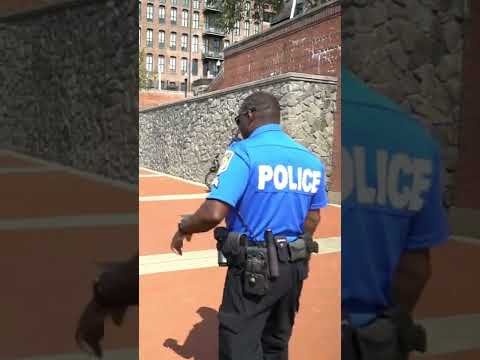
From the way the creator describes it, the stop was not treated as a dramatic showdown. Instead, it became a fast exchange about whether the right flotation equipment was being worn and whether the situation met what the officer expected to see. That is the core of the clip. The video is not really about winning an argument. It is about what happens when an underwater cleanup effort runs into a rule check on the surface.
What the officer was concerned about
In the transcript, the officer’s focus is direct: he wants to know about a life preserver and whether it is on the diver. The creator responds by trying to clarify that they are wearing a personal flotation device and that it is on them. The exchange is clipped and practical, the kind of conversation that can happen quickly when someone in authority is trying to verify equipment and decide what to do next.
That matters because the video keeps the concern specific. The question is not abstract safety talk. It is about the gear itself and whether what the creator is wearing satisfies the requirement being discussed. The officer also calls a supervisor to check on how the situation should be handled, which tells you the stop was not resolved on the spot by a simple yes-or-no answer.
How the creator handled the interaction
One of the clearest takeaways from the clip is the creator’s tone. The transcript says they tried to be respectful and to think outside the box, even if the officer came across as quick to act. That framing shapes the whole companion feature here: this is a story about managing a tense public interaction without escalating it.
Instead of turning the stop into a performance, the creator presents it as a moment of adjustment. The video suggests that the dive team was trying to keep working, stay compliant, and respond to the officer’s concerns in real time. That is a familiar challenge for anyone who does hands-on outdoor work in shared public spaces. You can be focused on the task in front of you and still have to explain yourself to someone whose job is to assess risk from another angle.
The interesting part is that the creator does not end the story at the stop itself. The interaction becomes a reason to rethink gear choices and how to make their setup clearer and easier to present.
Why the Wingman PFD became the takeaway
The most concrete outcome mentioned in the transcript is the Wingman: an inflatable over-the-shoulders PFD that the creator says they now wear. That detail is important because it turns the clip from a complaint into a gear-related resolution.
Rather than leaving viewers with only the memory of a ticket or a hassle, the creator points to a different setup that helps address the concern raised in the stop. The Wingman is not introduced with a long product explanation in the transcript, so the article should not pretend to know more than that. What matters here is the role it plays in the story: it is the creator’s answer to the problem created by the encounter.
That is a useful editorial distinction. In a lot of creator videos, the gear becomes the silent background. Here, it becomes the practical lesson. If the river, the dive, and the cleanup effort are the action, the PFD is the part that helps the action continue with fewer questions attached.
What viewers are actually seeing in this short clip
Because this is a short-form video, it is easy to read it as a simple “got hassled by police” moment. But the transcript makes the clip feel more layered than that. The creator is looking back at a specific incident, not just chasing attention from a roadside argument. They are revisiting a moment where the work itself—scuba diving in a river while collecting trash—created a visibility problem with law enforcement.
That is why the interaction matters to the audience. Viewers who come for river cleanup content are not only watching for what gets pulled out of the water. They are also learning how the creator responds when the environment, the equipment, and public authority intersect. The clip suggests that even a well-intentioned cleanup can raise questions if the safety setup is not obvious enough to people looking from the outside.
It also gives the video a social dimension that pure treasure-hunt content does not always have. Here, the job is not finding something valuable and leaving. It is being in the middle of a shared public space, doing work that the creator sees as useful, and still having to justify the method.
The real takeaway for the audience
The lasting impression is not that police were simply difficult or that the creator was simply right. It is that the encounter forced a practical adjustment. The creator says they stayed respectful, the officer asked questions, a supervisor was called, and the situation eventually helped shape a gear decision.
That makes the clip a small case study in how outdoor creators manage friction in public spaces. The lesson is not to treat every stop like a confrontation. It is to be ready to explain what you are doing, carry gear that is easy to identify, and adapt when a situation shows you where the weak point is.
For viewers who follow DALLMYD, that is probably the most useful frame for the video. The river cleanup is still the point, but the stop reveals the less glamorous part of that work: the need to communicate clearly when what you are doing looks unusual from shore.
Watch the original video: https://www.youtube.com/watch?v=UOilQVk15fs
RECOMMENDATIONS
All About The Life designs from Texas Thread Theory, inspired by the places you go and the stories you bring back.
Keep Exploring Badge
A vintage outdoor badge centered on one simple message: “Keep Exploring.” With mountains, evergreens, a river, hiking boots, lantern, map, and compass details, it’s made for hikers, campers, travelers, and anyone who is always curious about what’s around the next bend.