The moment a familiar road stopped being familiar
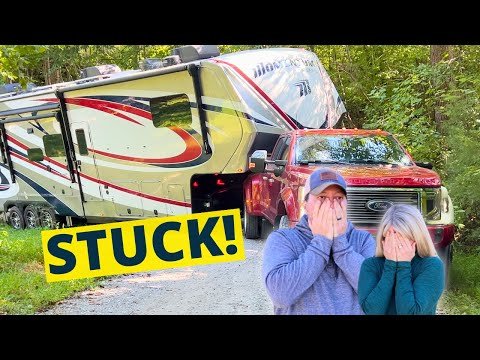
The short answer is that the RV did not fail on some random highway shoulder or in a bad campground entrance. It got stuck on a road Changing Lanes already knew, and that is what made the problem feel so much bigger. The steep gravel approach to the cabin had always been tense, but this time the truck lost traction on a narrow, high-grade turn and simply could not keep climbing.
That shift matters because the video is not really about a single bad maneuver. It is about a route that had become familiar enough to feel manageable, then turned into a place where small changes in surface and tire condition suddenly mattered a lot. Once the wheels started slipping, the rest of the day stopped being travel and became problem-solving.
What changed on the cabin approach
The road itself had not changed into something unrecognizable. What changed was the combination of conditions. Chad and Tara explain that the gravel near the cabin had become more like sand and dirt in the critical section, and Chad later notes that the truck tires were more worn than he had realized. Those two things together left them without the traction they needed.
That is the key detail in the story: the rig was not simply too large for the road, and the road was not simply too steep. It was the overlap of a loose surface, a sharp turn at the steepest point, and tires that were no longer biting the way they should. On a road like that, “almost enough” traction is still not enough.
The video also shows that the difficulty was not a surprise in the abstract. They had worried about the road before, and they mention having taken care of it in the past. But this time they were coming back after time away, and that meant the surface had had time to drift out of shape. A road that works one season can behave differently later, especially when a narrow turn starts cutting up under repeated use.
Why the first fixes were not enough
Once the truck stopped making progress, the crew tried what they could from the spot. Chad and Tara talk through backing up, adjusting the line, and adding material where the tires were going. Chad even walks up to the cabin to fetch an old carpet and later a plastic rug to help the tires grab more firmly.
Those attempts tell you a lot about the situation. They were not looking for a dramatic rescue at first. They were trying practical, improvised fixes on the spot, hoping a little extra surface would be enough to get the truck moving again. But the problem was not a small slip. The truck itself could not gain the momentum it needed, and the road geometry made every retry feel tighter.
The video makes clear that this was also a very mental challenge. Tara narrates the stress in real time, and Chad has to keep stopping to reassess where the rig is sitting. Even the simplest decisions, like whether to stay in four low, have to be made under pressure. That kind of situation compresses time. A few feet of movement can feel like a big shift, and every failed attempt makes the road look narrower.
How the wrecker team finally got them moving
After several tries, they called for outside help and eventually got a heavy duty wrecker team on scene. That part of the story is where the video turns from panic into coordination. The first wrecker operator did not want to attempt the same pass, but the boss arrived with another truck and the two worked together to solve the access problem.
Their solution was not flashy. They used boards to help on the passenger side, got the rig level enough to relieve the pressure on the bed rails, and then hooked the Ford 450 to the wrecking truck. The driver told Chad to stay in four low and drive forward slowly while the wreckers provided the pull and support needed to get the truck over the bad patch.
That detail matters because it shows the rescue was about more than brute force. It was about giving the tires and suspension just enough help to regain traction and move through the dead spot without forcing the rig into a worse position. In the end, the combination worked, and the RV got up the hill.
What they changed after the rescue
The video does not leave the incident as a one-time disaster story. Chad and Tara say they have already made changes since then. The truck now has beefier, grippier tires, and they have also gotten grading equipment so they can manage that road themselves instead of waiting for conditions to drift downhill.
That response is part of what gives the feature its practical shape. The lesson is not “avoid gravel roads altogether.” It is that a road to a cabin or remote property has to be treated like infrastructure, not just scenery. If the surface loosens, if the grade is steep, and if the truck tires are not helping as much as they should, the margin disappears quickly.
They also make clear that the issue is ongoing enough to keep learning from. This is not framed as a one-time fix where everything is solved forever. It is a road they now understand differently, and they are adjusting their setup to match what they actually face there.
Why this video lands as an RV cautionary tale
The strength of the video is that it never pretends the problem was glamorous. It is stressful, messy, and physically awkward. They had already spent time in Nashville, stayed overnight at Jericho Farmhouse, visited family in Ohio, and paused at Knoxville Campground before coming home. Then the trip ended with the hardest possible arrival: the place that should have felt safe became the one spot they could not immediately reach.
That is why this story sticks. It shows how RV travel can be smooth for days and then demand total attention on the last few hundred feet. It also shows how much confidence can depend on things that are easy to overlook, like tire wear or how loose a gravel road has become since the last visit.
For readers who have ever backed an RV into a tight site, climbed a steep driveway, or watched a familiar road change under their tires, the video will feel instantly recognizable. The relief at the end is real, but so is the reminder that some roads need more than familiarity to stay manageable.
Watch the original video: https://www.youtube.com/watch?v=7Y4Gq3VksDk
A closer look at the travel pattern behind the breakdown
The incident also sits inside a broader travel rhythm that makes the failure more human. This was not a single-purpose trip built around a stunt. They were moving between an RV resort, a Harvest Host stop, family time, and a return to the cabin. That mix matters because it shows the kind of travel that can make you trust your setup a little too much. You get used to repeated maneuvers. You start thinking you know how the rig behaves. Then one surface change exposes the weak point.
Tara’s reactions keep the video honest, but so does Chad’s willingness to rethink the setup afterward. There is no attempt to turn the problem into a victory lap. Instead, the story lands on a more useful note: the road now has to be maintained, the truck now has better tires, and the next climb starts with more caution than before.
That is probably the clearest takeaway from the whole trip. The RV did not get stuck because the drivers stopped paying attention. It got stuck because a familiar road, a steep turn, and worn traction came together at exactly the wrong time. Once that happened, the only real answer was patience, help, and a better plan for the road next time.
RECOMMENDATIONS
All About The Life designs from Texas Thread Theory, inspired by the places you go and the stories you bring back.

All About The Life Adventure RV Badge
A vintage All About The Life RV adventure badge featuring mountains, pine forests, lake scenery, a glowing sunset, and classic compass details. It’s made for RV travelers, campers, road trippers, and anyone who believes home can be wherever you park for the night.