Why this drive felt bigger than a mileage count
The plain answer is that this video is about a long RV route to Yosemite that becomes stressful, scenic, and oddly instructive all at once. Chad and Tara are not just moving from one place to another. They are managing the last stretch of a Grand Canyon stay, a two-day push of roughly 700 miles, and then a mountain approach that keeps asking more from their nerves than from the odometer.
That combination gives the episode its shape. The road is not background here. It is the main event, especially once the route starts narrowing and the warning signs get more specific. What makes the video work is that it never pretends the drive was effortless. The couple talks through the uncertainty, the braking, the heat, the parking, and the feeling that they are discovering the road at the same time they are driving it.
Fuel, heat, and a two-day push west
Before the mountain curves show up, the trip has already been asking for attention. They wrap up their Grand Canyon time with a final look back at the mule ride and then head out on a travel day that is clearly built around logistics as much as scenery. There is campground departure, fuel planning, and the familiar RV calculation of how far a stop can realistically be pushed.
The fuel stops matter because they show how much of RV travel is routine management. Chad and Tara use their discounted fuel program, compare retail prices with what they actually pay, and keep an eye on whether the truck is ready for the next leg. That may sound small, but it is part of what makes a drive like this feel real. Long trips are made of these tiny checks: how much fuel is left, whether the spot is tight, how much time remains before the next stop, and whether the day is slipping toward another overnight.
Heat adds another layer. The trip rolls through temperatures that are hot enough to affect how they plan their stopovers and how they think about the RV’s interior comfort. They even run the generator and air conditioning on the road so the rig arrives cooler at the Harvest Hosts stop. That kind of decision is easy to miss if you only watch the most dramatic mountain sections, but it is part of the whole story: this is travel shaped by weather, battery levels, and the need to make the next night manageable.
The road warnings that changed the tone
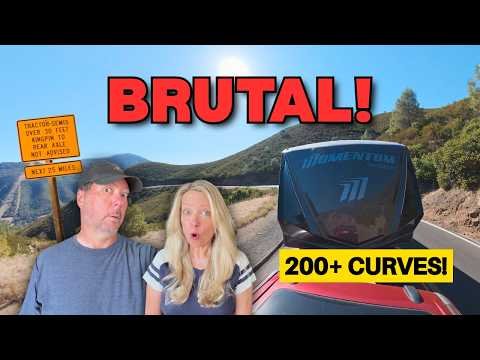
The most gripping part of the video begins when the route moves from ordinary highway travel into roads that come with warnings, tight turns, and a feeling of constant correction. Chad reads a sign noting that more than 30 feet from kingpin to rear axle is not recommended, and the couple immediately has to think through what that means for their rig. They do not have a neat, instant answer. Instead, they lean on experience, GPS guidance, and a willingness to proceed carefully.
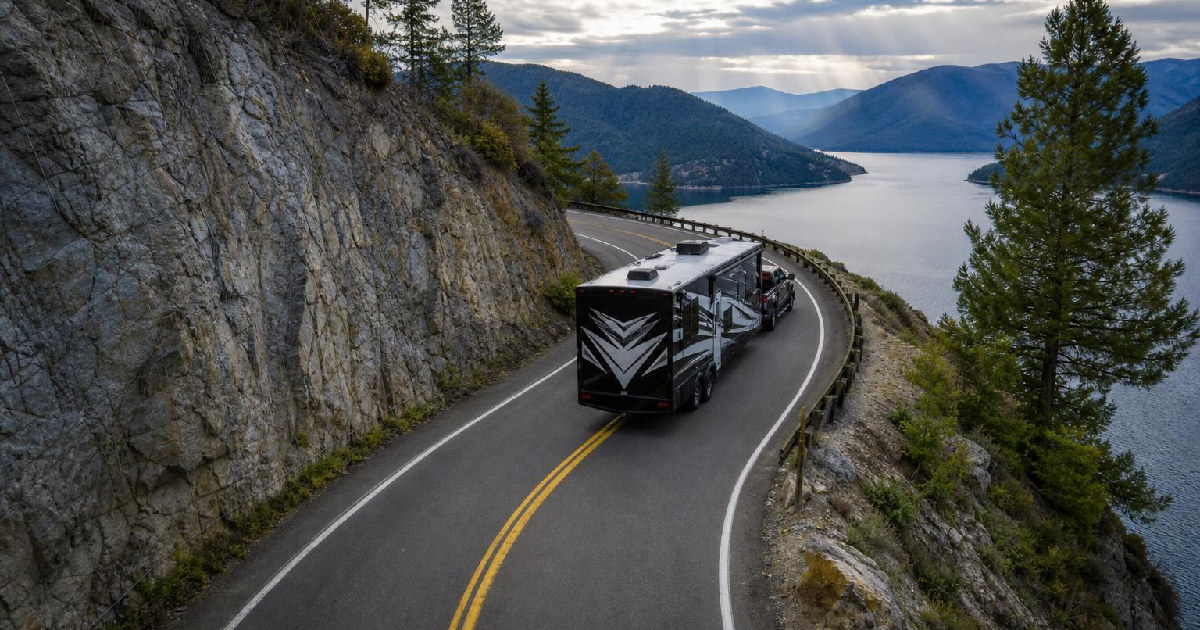
That uncertainty becomes a key feature of the episode. The road is not simply “hard.” It is hard in layers. California 49 brings steep grades, hairpins, and stretches where the lane feels narrower than expected. California 120 adds even more tension with tight curves and limited shoulder space. The couple talks through each section in real time, which makes their reactions useful for viewers who care about what towing actually feels like on these kinds of roads.
The Garmin RV 895 also quietly becomes part of the story. Tara notices that the GPS has food and amenities info built in, which is a small but telling detail: on a day like this, the device is not just telling them where to turn. It is also helping them work out where they might stop, eat, and survive the next stretch of road without improvising too much.
What the mountain curves revealed about RV travel
The title promises big curves, and the video delivers them, but the more interesting part is how the curves change the couple’s behavior. They do not treat the road like a stunt. They slow down, let traffic pass, pull over when needed, and check the rig. There is a practical rhythm to it: look ahead, judge the approach, keep the brakes under control, and avoid making the problem bigger than it already is.
That is why the brake check matters so much. After the rougher sections, Chad takes temperatures and explains what is normal versus what would be concerning. The numbers are not there as a performance flex; they are reassurance. They tell the audience that the rig is stressed but still within a workable range after the descent and braking they just finished.
The pantry-door issue lands in the same register. It is a nuisance, not a disaster, but it reminds viewers that RV travel is always a mix of the grand and the mundane. One minute you are staring at a river valley and the next you are figuring out how to keep a cabinet shut in transit. That contrast is part of the charm and the frustration of this kind of life.
Why the Harvest Hosts stop mattered
The overnight stop gives the trip a breather. It is steep at the parking area, but the couple makes it work, gets settled, and spends the evening in a place that feels quieter than the road before it. Tara says she slept well and liked the spot, and that calm matters because it shows the trip is not only about endurance. It is also about recovering enough to tackle the next day.
The stop near the restaurant and the open parking area also softens the tension before the final approach. They have room to breathe, eat, and reset. By the next morning, they are talking about being closer to Yosemite and looking forward to the girls joining them for Father’s Day. That shift in tone is important. The road may be demanding, but it is leading toward something they are excited about, not just something they have to survive.
Why this route felt so memorable
What stays with you after watching this episode is not a single hairpin or one perfect view. It is the accumulation of decisions. The couple chooses a route that is not ideal for a new RVer, trusts their planning, watches the road closely, and keeps moving even when the shoulders vanish and the curves stack up. They make it through by staying attentive rather than dramatic.
That makes the video a useful companion piece for anyone interested in RV travel toward Yosemite, or just curious about what a demanding mountain drive actually looks like from the cab. It is scenic, sure, but it is also about judgment: when to stop, when to let traffic pass, when to check the brakes, and when to accept that the road is simply going to be the thing you remember most.
And that may be the best read on the whole trip. Yosemite is still ahead, but the approach is already giving the story its own weight.
Watch the original video: https://www.youtube.com/watch?v=lRIkXDva3mc
RECOMMENDATIONS
All About The Life designs from Texas Thread Theory, inspired by the places you go and the stories you bring back.

All About The Life Road Trip SUV Badge
A retro All About The Life road-trip badge featuring a rugged SUV, mountain roads, directional signs, and classic compass details. It’s the perfect design for back-road explorers, overlanders, weekend travelers, and anyone who likes their adventures with a full tank and no strict itinerary.