A long day that starts before sunrise
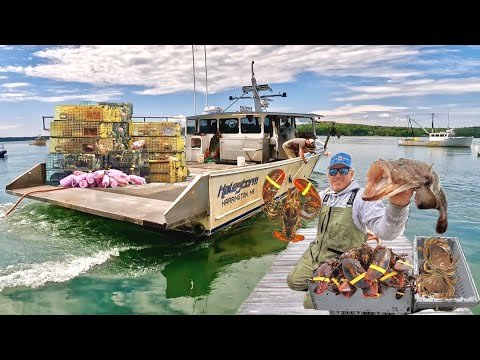
The clearest way to read this video is simple: Bluegabe is not just sightseeing in Maine, he is following a working lobster operation from the dark hours of the morning to the restaurant table. The direct answer is that this is a full commercial lobster day, and the value of the video is in showing how many steps sit between a trap on the bottom and a lobster roll on a plate.
The day begins well before dawn with a long offshore run, bait that has already been sitting for days, diesel smoke in the air, and a boat full of people who look used to getting on with it. Bluegabe makes it clear early that this is his first time seeing lobstering done this way in Maine, and that perspective shapes the whole feature. He is learning by watching, which means the video focuses less on theory and more on what the work actually looks and feels like when the crew is moving.
What a commercial lobster haul looks like on the water
Once the boat reaches the gear, the rhythm becomes repetitive but never casual. Traps are pulled, checked, and reset in a steady sequence while the crew works through hundreds of pots. Bluegabe says they are around the halfway point after roughly 250 pots and still have about 250 more to go, which gives a sense of scale without turning the video into a numbers-only exercise.
That scale matters because it changes how you read the work. This is not a quick outing with a few lines in the water. It is an all-morning process that asks for speed, coordination, and a lot of patience. Bluegabe keeps noticing how the crew handles rope, hooks, and the deck with a kind of practiced ease. He also keeps returning to the same idea: these people are tough, and the work is colder, heavier, and more physical than it looks from the shore.
The video does a good job of letting that reality land naturally. You see the boat, the bait, the traps, and the constant sorting, but the bigger impression is the labor itself. Commercial lobstering here is not presented as a romantic pastime. It is work that starts in the dark and keeps going until the last string is done.
Sorting the catch: size, eggs, and shell condition
The most useful part of the day may be the sorting, because that is where the rules of the fishery become visible. Bluegabe is walked through what can and cannot be kept in Maine: lobsters that are too small, too large, or females carrying eggs are turned back. He also learns about notches in the tail and how those mark a lobster that should be released so it can keep breeding.
That detail gives the video its practical center. The haul is not just about piling up lobster; it is about knowing which animals stay and which go back. Bluegabe repeatedly asks questions about what he is seeing, which keeps the audience grounded in the process rather than lost in jargon.
The video also briefly compares Maine lobster with Florida spiny lobster, but only in the context of what the crew is explaining on deck. The important point is not a broad comparison lesson. It is that the Maine system has its own rules, and those rules shape every box the crew fills.
Later in the day, Bluegabe is shown how to tell hard shell from soft shell. The difference is visible in the claws and body, and the crew explains that the soft-shell lobster is worth more at the moment. That small piece of information is one of the best examples of why the feature works as a companion to the video: it turns a casual watcher into someone who understands what the crew is sorting for and why some lobster matter differently from others.
The part most people never see after the boat docks
By the time the boat heads back in, the day is only halfway finished. The catch still has to be weighed, unloaded, and moved into the chain that gets lobster to buyers. Bluegabe follows that transition closely, and it becomes clear that the wharf is more than a dock. It is a working handoff point where lobster is weighed, recorded, and prepared for the next leg.
That is also where the video’s economic reality starts to show. The day’s haul is described as disappointing for the crew, with the catch only covering costs. Bluegabe mentions bait expenses, diesel, and the fact that a boat like this represents a major investment. He does not try to force a dramatic business lesson out of it, and that restraint helps. The point is simply that a day on the water can involve enormous effort without producing the kind of return people outside the industry might assume.
He also notices how the crew handles tides and mooring, which adds another layer to the work. In Maine, the water moves dramatically, and the boat is not left tied to the dock the way a casual observer might expect. That shift in the landscape is a quiet reminder that the environment shapes the job as much as the catch does.
From the wharf to the restaurant table
After the weigh-in, the lobster moves again: from the wharf to an AC truck, then on to a wholesale buyer, and eventually to the restaurant. Bluegabe follows that chain instead of treating the meal as a separate scene, which is what gives the video its stronger structure. He is not just eating lobster in Maine. He is tracing how the product gets there.
The wholesaler explains how the lobster is held cold and oxygenated, which helps Bluegabe understand the system as a holding process rather than a simple drop-off. He also learns that the restaurant is part of the same family network behind the fishing operation, which makes the whole day feel connected from trap to plate.
At the restaurant, Bluegabe gets a look at lobster rolls in more than one style and tries the versions he is offered. He is especially taken by the freshness and by the idea that the lobster served there came through the exact process he had just watched. That is the emotional payoff of the video, but it works because the day spent on the boat already did the heavy lifting.
What the day suggests about the work behind Maine lobster
The strongest impression left by the video is not just that Maine lobster tastes good. It is that the entire chain depends on people who are willing to work long hours in cold conditions, stay organized, and make quick decisions about what to keep. Bluegabe comes away impressed by the crew, the family operation, and the sheer amount of effort built into something many people only encounter as food.
He also leaves with a clearer sense that the job is cyclical. A rough day can barely cover expenses. A better season would change that picture, but the mechanics would stay the same: traps, sorting, weighing, hauling, cooling, selling, and cooking. That is what the video gives readers that a restaurant meal never can.
For anyone curious about Maine commercial fishing, the big takeaway is that the real story is not one haul or one lobster roll. It is the system around them. This episode lays that system out plainly, without dressing it up, and that is exactly why it works.
Watch the original video: https://www.youtube.com/watch?v=FtvvdnskMj0
RECOMMENDATIONS
All About The Life designs from Texas Thread Theory, inspired by the places you go and the stories you bring back.

All About The Life Road Trip SUV Badge
A retro All About The Life road-trip badge featuring a rugged SUV, mountain roads, directional signs, and classic compass details. It’s the perfect design for back-road explorers, overlanders, weekend travelers, and anyone who likes their adventures with a full tank and no strict itinerary.