The kind of RV day that turns on one number
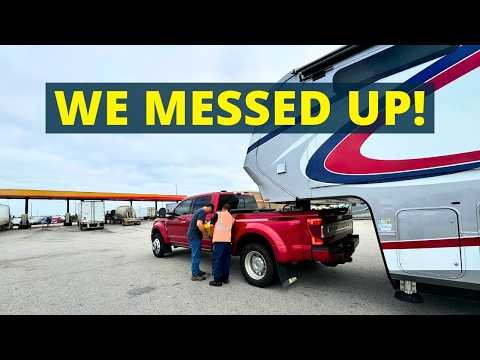
The short answer is that this episode is about how a long RV transfer can go sideways when the fuel margin gets too tight. Changing Lanes set out for a four-day push from Texas to Sedona, wanting the trip to stay quiet and uneventful. Instead, the first real stop turns into a low fuel pressure problem, a reduced engine power warning, and a tense moment where the rig will not quite behave the way it should.
That is the useful core of the video. Not the embarrassment, not the noise, and not the fact that they were recognized while dealing with the issue. It is the way the trip immediately exposed how much long-distance RV travel depends on small decisions made well before the next exit.
Why the fuel stop became the first test
Chad and Tara are clear about what they wanted from this leg: four days of travel, as little drama as possible, and a clean run toward Sedona. They even joke that maybe longer booking gaps are the real answer after enough of these travel days. But once the truck starts complaining about fuel pressure, the whole idea of a simple moving day gets replaced by roadside triage.
The problem is not just that the engine light comes on. The truck enters reduced engine power, and the situation quickly becomes less theoretical and more immediate. They are close enough to a Love’s fuel stop to hope they can solve it there, but not close enough that the system is happy about being pushed to the edge. The phrase “low miles left” clearly does not mean “safe margin” in this case.
What makes the moment compelling is how ordinary it is. There is no dramatic mechanical breakdown montage. Instead, there is uncertainty, a quick assessment of whether they need a tow, and a practical scramble to figure out whether diesel can be added without making a bigger mess of the parking lot.
How a roadside problem became a workable reset
The recovery happens because the crew does what RV travelers do when the plan stops being elegant: they adapt.
Tara handles the coordination at the stop while Chad keeps trying to coax the engine back to life. A helpful worker offers a diesel container, and that small act changes the whole feel of the scene. Rather than turning into a massive delay, the fuel stop becomes a problem-solving session with a little grace from the people around them.
The first few gallons are not enough to make everything instantly normal. The engine still sounds unhappy, and the truck throws a cranking-time warning. But more fuel eventually does the job. Once the tank has enough in it, the RV starts again and they can move on with the day.
That sequence matters because it shows the difference between panic and process. They do not pretend the situation is fine. They do not turn it into a lecture either. They just get enough fuel in the tank, clear the code that came with the low-pressure event, and keep rolling.
Overnights that kept the trip moving
After the rough opening, the rest of the journey becomes a study in working around the route instead of fighting it.
The first overnight is a simple stop near the highway. It is not glamorous, but it is practical. They stay on the hitch, run the heat pump, and use the rig’s battery setup without having to plug in. For a travel day like this, that kind of self-sufficiency matters more than scenery.
The next overnight at a Harvest Host location near D.H. Lescombes Winery gives the trip a softer landing. They park, grab food to go, and note the quiet once the barking in the distance dies down. The meal, the view of the mountains, and the easy setup all help reset the tone after the first-day fuel mess.
By the time they reach the KOA on night three, the trip has settled into a rhythm, even if the route itself keeps changing. The KOA is described as just okay rather than outstanding, but that is almost beside the point. It serves the same role as the earlier stops: a place to sleep, regroup, and keep the itinerary alive.
Checklists, routing, and the mental load of long travel days
One of the clearest takeaways in the video is how much long RV travel depends on routine.
Chad talks through the checklist habits they rely on: doors closed, propane off, slide strategy sorted, towing connections set, GPS route active. When they are moving from one overnight stop to the next, those small steps are not filler. They are the structure that keeps the day from becoming chaos.
The same is true of route management. Their Garmin does a lot of heavy lifting, especially when highway delays build up or when the system tries to steer them around a bad stretch of I-10. At one point, the detour through town traffic is frustrating, but it is still better than sitting in a backup for an hour. That tradeoff is part of the job when you are moving a large RV across multiple states.
The video also makes a point about travel fatigue that feels especially honest. Daylight savings, time-zone changes, and long driving stretches make the crew feel worn down in a way that is more cumulative than dramatic. Nobody is pretending this is the glamorous side of RV life. It is just the side most people do not see: planning, re-planning, and staying mentally ahead of the next stop.
What the trip says about RV margins
This is not really a story about bad luck. It is a story about margins.
The first day goes wrong because the fuel buffer is too thin. The solution works because they have a helpful stop nearby, enough patience to keep trying, and a trip plan that allows for overnight recovery. The rest of the journey works because they keep choosing practical options: a fuel stop before the destination, an easy lunch pause, a quieter overnight when available, and a route that prioritizes getting there over making every mile perfect.
That is probably why the video lands the way it does. It is not trying to prove anything grand about RV life. It just shows how a trip that starts badly can still end in Sedona if the crew keeps making sensible choices after the first mistake.
For viewers who have ever watched an RV fuel gauge a little too closely, this one will feel uncomfortably familiar. For everyone else, it is a good reminder that long travel days are rarely ruined by the biggest problems. Usually, they get complicated because one small assumption was off by just enough to matter.
Watch the original video: https://www.youtube.com/watch?v=MnW737RVFmY
RECOMMENDATIONS
All About The Life designs from Texas Thread Theory, inspired by the places you go and the stories you bring back.

Go Somewhere — Life Is Better On The Road
A bold road-trip design featuring an RV, winding road, mountains, lake scenery, and the message “Go Somewhere — Life Is Better On The Road.” Made for travelers, campers, RVers, and anyone who feels a little more like themselves once the highway opens up ahead.