The Kimberley mission is really about solving a route no one knows
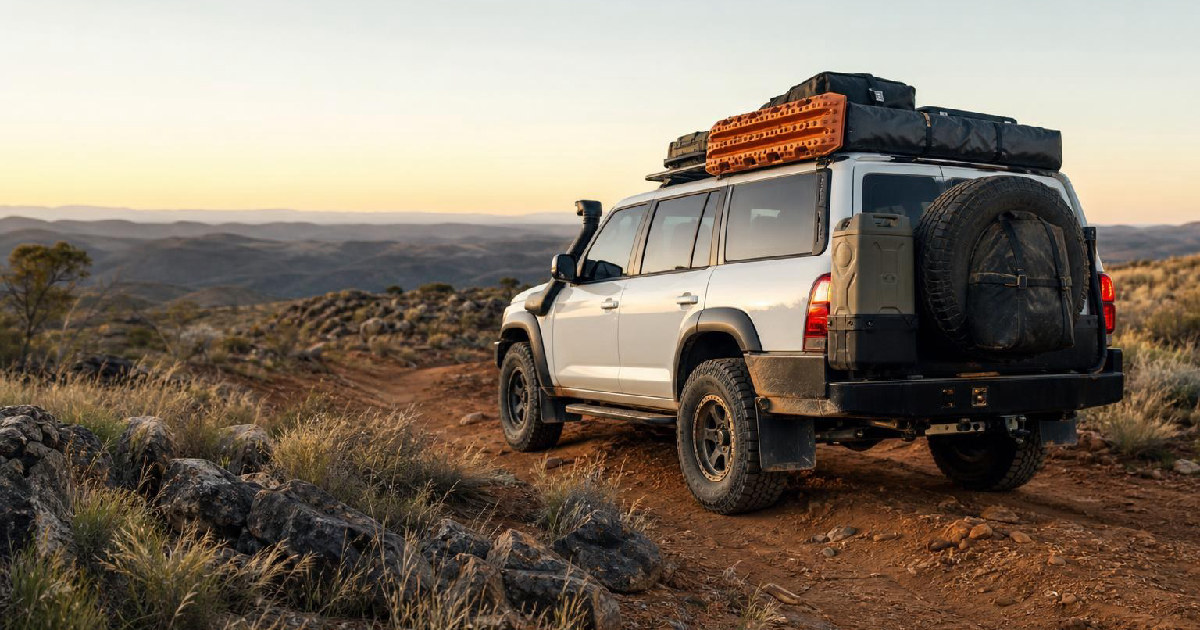
The simplest way to read this 4WD 24-7 episode is also the most accurate: Shaun Whale, Graham Cahill and the crew are trying to drive toward a secret unnamed Kimberley beach that no four-wheel drive has ever reached. But that plain answer misses the real shape of the video. This is not just a chase for a destination. It is a route-finding problem set in one of Australia’s harshest corners, where every major milestone depends on whether the next obstacle can be crossed, repaired or worked around.
That is why the episode holds together so well. The beach matters, yes, but the trip keeps asking a more interesting question: can a convoy actually force a path through flooded river country, brutal rock and deep scrub far enough to stand on sand that has never been driven to before? The answer, as the video shows, is never straightforward.
A flooded river decides whether the trip even starts
The early hurdle is the sort of obstacle that ends a trip before it begins. The crew reaches the Drysdale River, and it is not a casual crossing. It is wide, flowing hard and clearly higher than normal after rain has pumped up the Kimberley waterways. The stakes are obvious from the start: if they cannot get across here, the whole coast mission stalls.
What stands out is how methodical the crossing feels. The crew watches reference rocks, drops tyre pressures and uses the first vehicle as the test case. That alone tells you how serious the water is. One vehicle floats and then drifts off line, another gets pushed into rocks, and the whole convoy is forced to treat the crossing as a live assessment rather than a routine drive-through. There is no bravado in the way the best crossings happen here; the video rewards patience, light hands and a willingness to recover quickly when the current starts writing its own script.
For readers wondering what the episode is actually doing in its first act, this is the answer: it establishes that the Kimberley is not letting the crew pass on confidence alone.
King George Falls gives the crew a rare mid-trip reset
Once the river is behind them, the trip opens up enough to reach King George Falls, and the change in mood is immediate. After the tension of the crossing and the uncertainty of the route, the falls act like a reset button. The crew’s reaction makes that plain. This is one of those places that still feels enormous even on screen, and the video leans into that without over-explaining it.
The falls also remind you why these missions work as adventure features rather than just travel logs. The destination is visually strong, but it is also placed in context: the crew has had to earn the view. They are not rolling up on sealed road comfort. They are arriving after a long slog through country that keeps asking for more fuel, more attention and more respect.
That context matters because it makes the stop feel like a reward rather than a detour. The crew can breathe, camp, swim and take stock before the real off-track push begins.
When the track gets rough, the rigs start paying the price
Once the mission turns away from the easier track work and starts pushing toward the coast, the video becomes a rolling workshop. Mechanical issues are not random side notes here; they are part of the terrain’s pressure.
The LandCruiser 200 Series loses an upper control arm bolt and needs a roadside correction using what the convoy has available. Later, the big warning light is the diff damage in the lead vehicle, which is enough to push that rig back into two-wheel drive only. Elsewhere, the camera car shreds a serpentine belt and the crew has to sort through the remains before moving on. Tires are also constantly under attack from sharp rock, roots and hidden stumps. Sidewalls fail, plugs get used and spare tyres start looking less like insurance and more like inevitability.
What the episode captures well is the cumulative effect of those problems. None of them alone would define the trip. Together, they create a picture of how a remote mission actually wears on people and machines. The terrain is not just hard; it is attritional. It chips away at everything.
The final push off-track is where the mission becomes something else
Once the convoy leaves the established track behind, the video shifts into a different mode. The route is no longer a known line with bad sections. It is now a guess, shaped by hills, creek lines, scrub and the hope that a valley or flatter patch might lead somewhere useful. Satellite images and maps can only do so much; once the wheels touch the ground, the crew is really navigating by inference.
That is where the mission becomes most compelling. The group is not just driving toward the coast. They are trying to out-think country that has no reason to make the job easy. In some places the grass hides rocks so well that even a slow line can turn into damage. In others the convoy has to stop, winch, drag or rethink because the line ahead simply closes.
The best part is that the crew never pretends to know more than they do. They scout, they reverse, they split up, they change plans. The coast is close enough to tease, but far enough away to keep forcing decisions.
Why the beach landing matters so much to the crew
When the rigs finally break through and the ocean appears, the payoff lands because the video has spent so much time showing the cost of getting there. This is not just a nice view after a long day. It is a coastline that feels earned.
Standing above the sand, the crew treats the moment like an achievement, and that reaction makes sense. They have reached a beach that, by the video’s account, has never been driven to by a four-wheel drive. That makes the arrival feel historical in a small but real way. It is a place where the track did not exist until they forced a version of one into being.
The final beach camp sharpens that feeling. It is not only remote; it is the kind of camp that makes the whole struggle visible at once. The coast, the river, the rocks, the fuel load, the busted parts and the improvised repairs all sit in the background of the same scene. Then the trip shifts again, from route-making to fishing, food and the simple satisfaction of having made it through country that kept saying no.
Watch the original video link
For the full Kimberley run, including the crossings, bush repairs and final walk down to the secret beach, watch the original video here: https://www.youtube.com/watch?v=HsQXpa-Ls_w
If the episode leaves one clear impression, it is that remote-country travel is rarely about one hero moment. It is about stacking small wins until the map finally matches the line you hoped to make.