The canal looked perfect until the water moved
The plain answer is that Bluegabe went back to a shallow South Florida canal because he had seen something huge roll there before and never figured out what it was. That unanswered sighting is what gives the whole video its shape. This is not just a quick fishing stop; it is a return trip built around a single unresolved moment from a previous visit.
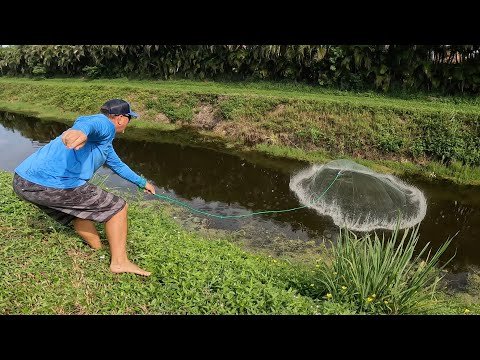
The canal itself is doing a lot of the work here. It is low, narrow, and tied to a culvert where water flows into a deeper pocket. That deep hole has become a gathering place for fish, even as the surrounding water stays thin enough to make the whole scene feel almost improvised. Bluegabe’s problem is simple: he already tried rod and reel on this spot and got nowhere. So this time he comes prepared with a much bigger tool.
Why the cast net became the better tool
Bluegabe’s choice of gear says a lot about what kind of day he expected. A 12-foot cast net is not subtle. It is the kind of net meant to cover a broad area all at once, which makes sense in a canal that feels too small to hide much. He also brings an eight-footer as backup, along with a few other odds and ends for the day, including gear that could have turned the trip in a different direction if the fish hunt had gone better.
The important thing is that this was never really a standard rod-and-reel outing. He had already learned that whatever was moving through this canal wasn’t being tempted easily. The mystery fish had not eaten before, and the conditions had changed since then anyway. Water was higher now, which meant fish that had been pinned in a tighter space could have spread out or tucked into cover. In other words, the setup he remembered was already gone.
That makes the cast net feel less like a backup plan and more like the only honest answer to the problem. If the fish won’t bite, you catch what you can see.
What the net actually pulled up
The first throw is the kind of moment that sounds bigger than the result. Bluegabe expects the net to be heavy. He even admits he worries about whether he will be able to haul it back up. Instead, he ends up with one tilapia. Not the mystery fish, not a giant gar, not even the big turtle he half expected might show up. Just one fish, and a very underwhelming one for all the effort that went into the throw.
There is a funny kind of honesty in the way that lands. The net is huge. The canal is tiny. The expectation is high. The result is one fish and a lot of mud. That mismatch becomes the joke of the day, especially as he keeps trying to figure out what moved in the water and what simply disappeared before the net got there.
Later throws do better in quantity if not in drama. He pulls up a mix of fish, including cichlids and what he describes as armored catfish, along with more tilapia. The key detail is not just that he caught fish, but that the fish he caught were mostly non-native species. That changes the whole tone of the recovery. This is no trophy pond. It is a canal where the catch itself raises the question of what belongs there and what does not.
Why the fish in this canal are not all equal
Bluegabe makes a point of separating the fish that show up in the net. Some are native, but many are not. That distinction matters to him, and he says it plainly: there is no real reason to put these fish back into the same water. Instead, he talks about them as food for birds, raccoons, or people rather than as fish to be released again.
That practical view gives the video its environmental edge without turning it into a lecture. The canal is already stressed. The water is low, the habitat is compressed, and the fish mix is heavily skewed toward exotics. In that context, each throw of the net becomes less about sport and more about cleanup through harvest. The fish are not being framed as villains, exactly, but they are also not being treated as part of a healthy balance.
Even the comment about a fish fry lands in that same space. The catch may not have produced the mystery animal Bluegabe was after, but it did produce enough for a useful meal and enough to avoid sending more non-native fish back into a canal that already seems crowded with them.
The mystery fish never showed, and the day changed directions
Bluegabe keeps circling back to the same disappointment: the fish he actually came for never appears. He says he has seen something roll in that canal before, something large enough to stick in his mind for a month, but the current trip does not solve that puzzle. The higher water, the fish moving into cover, the shallow conditions, and the sheer weight of the net all seem to work against the clean reveal he wanted.
That is why the video feels less like a catch report and more like a field note. It is a record of a place that changed before he could return to it on his terms. The canal that once seemed loaded with opportunity now acts like a moving target.
Then the day takes a hard turn. Crystal gets a ping on Bose’s iPad, which has been stolen out of her bag after a recent trip. That pulls the family away from the canal and into a separate problem involving a sheriff’s call and a location trace that points toward South Bay and Belle Glade. The fish mission is no longer the main event. Real life takes over, and the video ends with the unresolved canal mystery still unresolved.
What makes this trip worth watching anyway
If you only look at the outcome, this could seem like a frustrating fishing trip with a weak finish. But the video works because the frustration is the point. Bluegabe does not pretend the canal cooperated. He does not turn one tilapia into a heroic story. He shows the mismatch between the image he had in his head and the reality waiting in the water.
That honesty gives the video its value. It shows how a simple return trip can be shaped by memory, by changing water levels, and by the limits of the gear in your hands. It also shows how quickly a day built around one target can become something else entirely.
Watch the original video: https://www.youtube.com/watch?v=Kz6ClHYQTs0
RECOMMENDATIONS
All About The Life designs from Texas Thread Theory, inspired by the places you go and the stories you bring back.
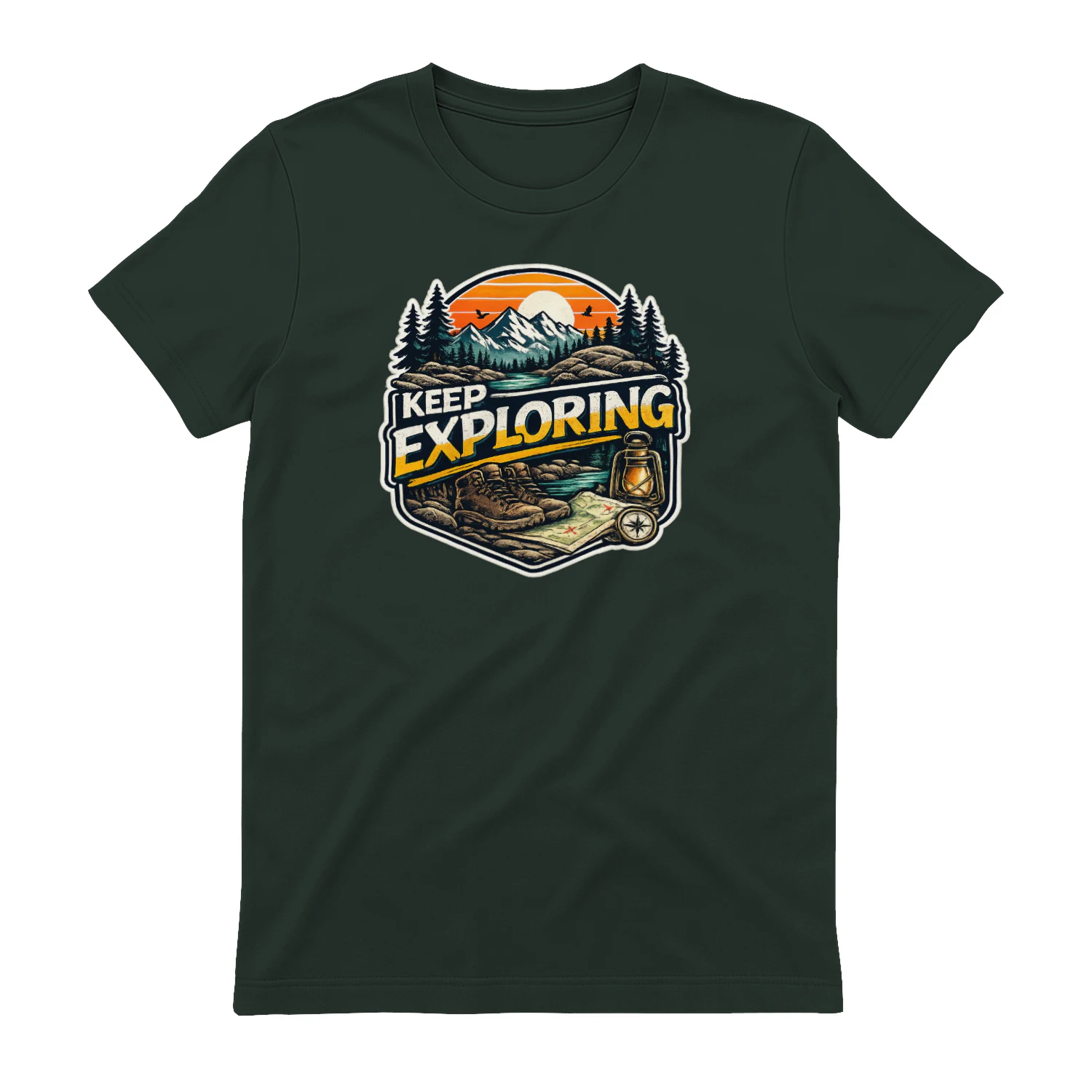
Keep Exploring Badge
A vintage outdoor badge centered on one simple message: “Keep Exploring.” With mountains, evergreens, a river, hiking boots, lantern, map, and compass details, it’s made for hikers, campers, travelers, and anyone who is always curious about what’s around the next bend.