
The real question behind the title
The cleanest way to read this Wild RV Life episode is simple: they are testing what counts as RV life when the RV is not actually part of the overnight stay. That sounds like a joke at first, and the video treats it like one, but the answer underneath is pretty straightforward. Their version of RV living is not only about sleeping in a rig. It is about the larger orbit around it: building, fixing, towing, troubleshooting, visiting places that matter to other RVers, and collecting the kinds of stories that only happen when travel is messy and practical at the same time.
That is why the title works. "Are We Even RVers Anymore?" is less of a complaint than a prompt. The episode keeps returning to the idea that RV life is as much about movement and problem-solving as it is about the vehicle itself.
Why the trip still counts as RV life to them
The video opens by undercutting itself in the best possible way. They are heading to an RV park without their RV, and they immediately know how odd that sounds. But the rest of the episode makes the point that RV life has never been only about a parked unit and a campsite hookup. It is also about the people they meet, the places they reach, and the projects they keep carrying with them.
That broader definition matters because their day is split between two worlds. On one side is the cargo trailer conversion they are actively building. On the other is the visit to friends who have taken on the challenge of owning an RV park. The trip is not a detour from RV life; it is part of the same ongoing pattern of hands-on travel and hands-on making.
The cargo trailer work that brackets the getaway
Before the park visit, the video spends time in the middle of the build. They are fitting final wallboard, cutting out window openings, and thinking through how the finished interior will come together. That work gives the whole episode some structure, because it reminds you that the trip is happening inside a bigger project.
A few details stand out because they show how methodical the build is without turning into a manual. They are using a router with a flush-cut bit for the wallboard openings, then talking through the finished wall layers, the insulation, and the smooth surface they are aiming for. Craig even calculates an R value for the wall assembly and lands on an R9 total. The tone is casual, but the practical point is clear: this is not just a shell going together. They are trying to make it feel solid, finished, and usable.
One of the more memorable moments is Victoria’s improvised outlet-marking tool. Instead of simply cutting blind or relying on guesswork, she has made a homemade method for locating the outlet box behind the wallboard. Craig admits he had considered using the router for the job, but Victoria talks him out of it because of the hidden wiring. That exchange says a lot about the dynamic of the build. It is collaborative, a little improvised, and grounded in the reality that you often cannot see what matters most until you make a tool to find it.
What Cypress Landing adds to the story
Once they arrive at Cypress Landing RV Park in Doer, Alabama, the episode shifts from construction to environment. The park itself becomes part of the story, not just a backdrop. The trees, the grass, the cabins, the boat ramp, and the lake all feed into the sense that this is a place built for lingering and exploring, not just checking in and moving on.
That matters because they are visiting friends Todd and Sheila, who are documenting the work of taking ownership of the park. The creators never pretend that a new RV park is easy to run. In fact, the video leans into the opposite: there are septic issues, maintenance headaches, and the constant sense that a new park owner is learning in public. But the episode also shows why people take on that kind of challenge. The setting has personality. The lake access, the cabins, and the boating options all make the place feel like an experience rather than a simple overnight stop.
The trip also shows one of the video’s quieter ideas: RV communities are often built as much around shared effort as shared travel. You can see that in the way the creators talk about Todd and Sheila’s work, and in the way the visit becomes a kind of homecoming for people who understand the same strange mix of logistics and freedom.
A weird but revealing night around the beaver hunt
The beaver hunt sequence is the part of the episode most likely to surprise a new viewer, but it also fits the broader theme. If RV life is partly about the unexpected responsibilities that come with property and place, then this is the episode’s most extreme example.
Todd and Sheila walk them through the problem: a beaver has been causing trouble at the park by moving grass and building around the area. The conversation is half serious and half absurd, which is exactly why it works. There is a trap, a lure, a lot of caution, and a lot of nervous humor about the smell and the setup. The creators do not pretend to be experts. They are clearly reacting to the situation as guests who have been invited into a very specific local problem.
That makes the segment more than a joke. It shows what it means to live around places like this: sometimes the story of an RV park is not the brochure version, but the maintenance version. The episode captures that without turning preachy about it.
Boats, breakdowns, and the kind of travel memory that sticks
If the beaver hunt is the strangest part of the video, the boat outings are the most revealing. First comes the older boat and truck combination, which is already carrying the kind of uncertainty that makes travel feel alive. The truck needs fluids checked. The boat battery is bad. The motor needs coaxing. The day keeps suggesting that reliability is partly earned, partly hoped for.
And yet they keep going. They launch, test the speed, pass under a low bridge, and eventually admit that the boat is doing enough to make the trip worthwhile. Later they take the rental pontoon-style boats offered at the park and head out again, this time toward dinner. The trip includes turtles, a restaurant stop, and a sunset cruise that turns the lake into the main attraction.
That sequence is probably the best evidence for the whole episode’s argument. The memories that stick are not the polished ones. They are the ones with sputtering motors, lost hats, nervous laughter, and the kind of scenery that makes even a slightly chaotic ride feel worth it.
Why the video lands where it does
By the end, Wild RV Life does not answer the title question with a strict yes or no. Instead, it offers a more useful version of the answer: RV life is a practice, not a pose. It can include a cargo trailer build, a cabin stay, a borrowed boat, a friend’s new RV park, and a sunset on the water. It can also include checking fluids, fixing a fuel issue, worrying about a battery, and laughing through the parts that do not go according to plan.
That is what makes this companion feature, and the video beside it, feel cohesive. The creators are not trying to prove they are still RVers. They are showing you the wider shape of the life they have built around RVs, and why that shape still holds even when the overnight setup changes.
Watch the original video: https://www.youtube.com/watch?v=dBoz_WanS_w
RECOMMENDATIONS
All About The Life designs from Texas Thread Theory, inspired by the places you go and the stories you bring back.
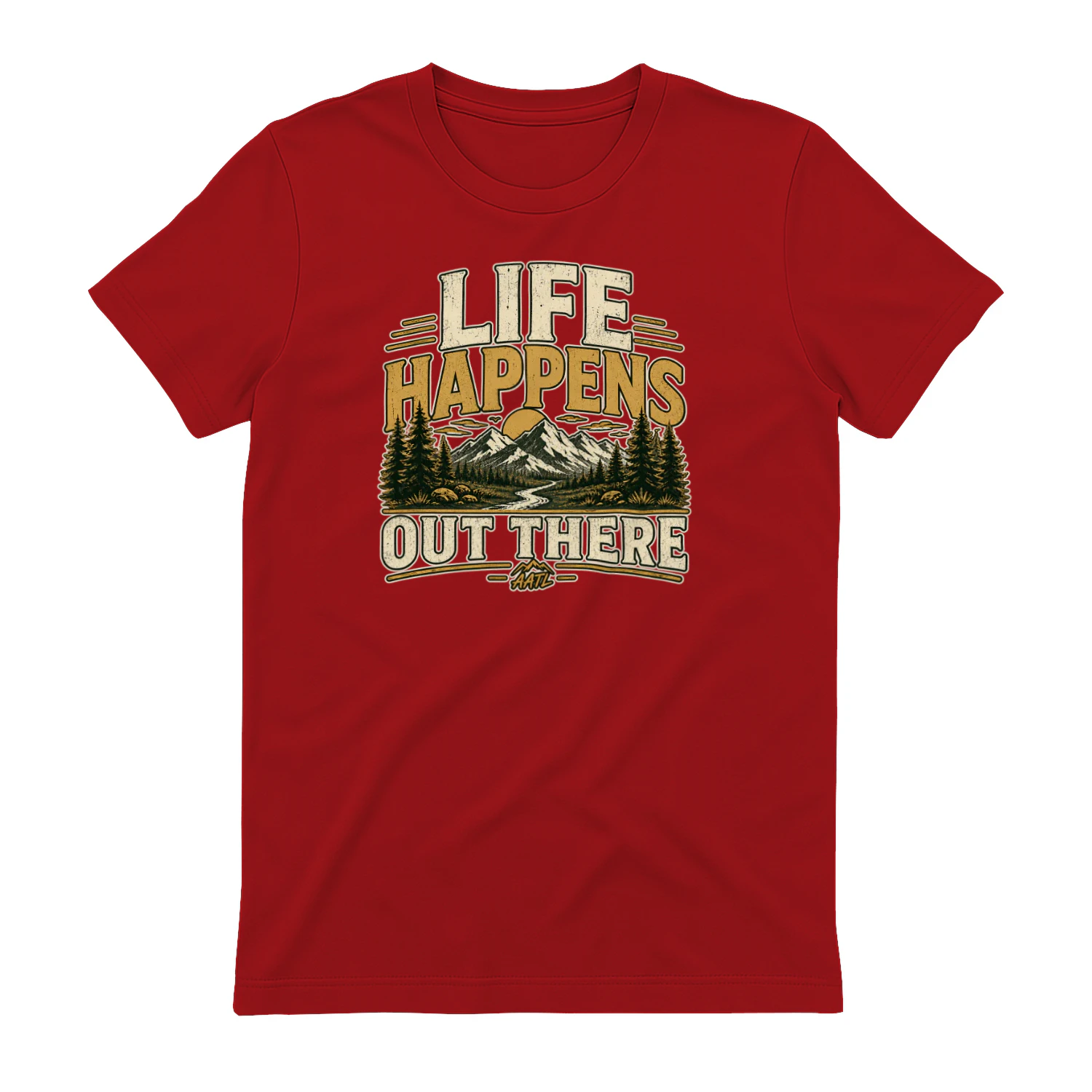
Life Happens Out There
An outdoor-focused AATL design celebrating mountains, forests, hiking, camping, road trips, and the simple idea that life happens when you get out there and explore.