Why this mangrove camp is really about timing
The clearest way to understand this video is that it is a tide test first and a camping trip second. Minsi Outdoors Beachcraft is not simply setting up a hammock in a scenic spot. She is trying to stay one step ahead of the water, using a short window before a king tide turns a sandy patch into an underwater campsite. The result is a compact, self-made challenge: find the right trees, trust the setup, and see whether a night above the water is actually possible.
That timing gives the whole video its shape. The beach looks usable at first, but only briefly. She keeps checking the tide, the tree line, and the high-water marks on the trunks, because this is the kind of camp where a few centimetres matter. The question is not whether the place is beautiful. It is whether it can hold a hammock long enough to make the idea work.
Reading the tree line before the water comes up
A lot of the tension comes from the way she studies the mangroves before committing to them. She does not rush straight into the first obvious tree. Instead, she walks the area, looks for thicker trunks, compares the height of the marks on the bark, and tries to judge where the water has been before. That part of the video feels especially grounded because it is built on observation rather than certainty.
There is no magic shortcut here. One tree is too small. Another grouping looks promising but still leaves her second-guessing the spacing. She needs more than somewhere to hang a hammock; she needs two anchors that can work together, plus enough room to move around once the tide starts rising. That makes the search feel less like a setup montage and more like a real decision-making process.
Even the little environmental details matter. She notices salt on the leaves, sandy wet patches, and the lines left on the trunks. She checks the morning tide against the evening king tide and keeps adjusting her judgment as the picture becomes clearer. In that sense, the campsite is built by reading the landscape as much as by handling gear.
A camp built around a tide window
What makes the whole adventure more compelling is that she is never working with unlimited time. She keeps coming back to the same pressure point: the water is going to rise, and she has only a few hours to settle in before the beach disappears. That changes the feel of every task.
Hammock hanging becomes a bit of a balancing act. Crossing the water while it is still possible feels like a practical move, not a dramatic one. Even the way she gathers fire-starting material and checks the nearby branches is shaped by the clock. The camp is not static; it is being assembled inside a moving environment.
That is also why the video has such a satisfying payoff. She makes a call, adjusts the hang, and eventually decides the setup should be high enough to ride out the tide. The confidence never becomes overconfidence. She still sounds aware that things could go wrong, but she commits anyway. That willingness to try is central to the whole feature of the trip.
Dinner, darkness, and the return by paddle board
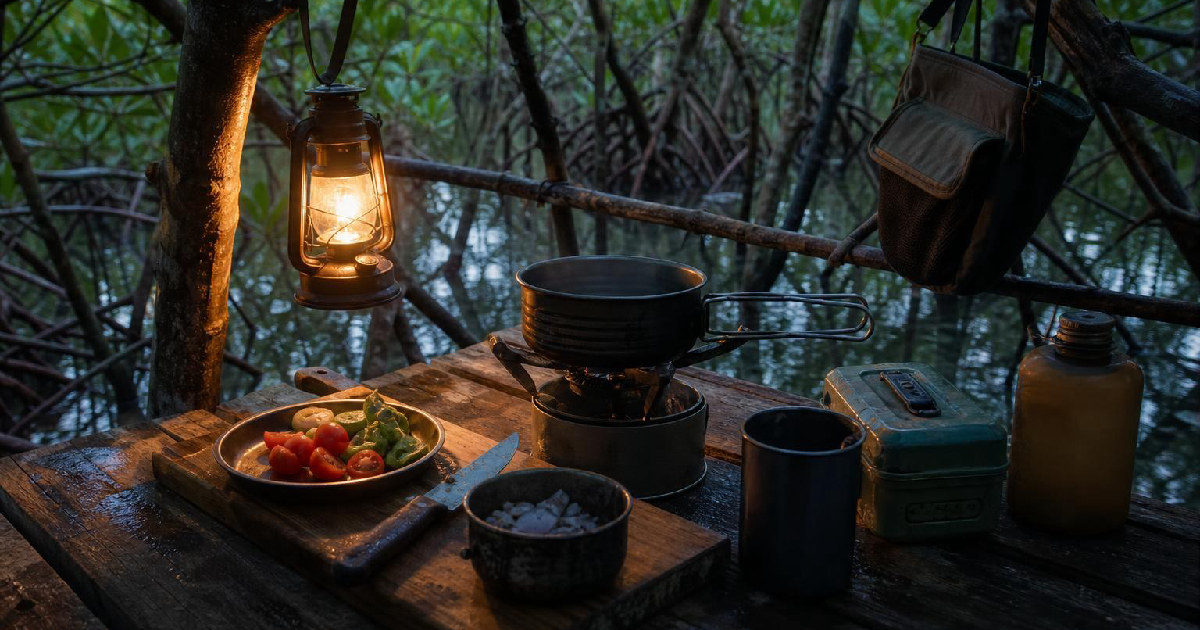
Once the camp is in place, the pace shifts from setup to living in the space. She explores nearby, spots soldier crabs and snails, checks out the different feel of the mangrove area, and then returns to cook dinner before the water comes fully in. The meal is simple and improvised, which suits the setting. She had planned one thing, forgot part of it, and worked with what she brought instead.
That practical adjustment says a lot about the tone of the video. This is not a polished bush kitchen performance. It is someone making dinner under the mangroves while keeping an eye on the rising tide and the smoke, then eating quickly because the window is closing. Even the coconut becomes part of that improvised rhythm.
The return by paddle board adds a sharper edge. By the time she comes back in the dark, the whole area is underwater, which makes the camp feel both remote and earned. The board becomes the way back into a place that no longer looks like the same campsite. That transformation is one of the most memorable parts of the experience: the land you used earlier in the day is simply gone under water by night.
Morning after the water reaches its mark
The morning segment works because it confirms the camp actually held. She wakes up dry, notes how close the water got, and heads out into the high tide with the site still intact. That matters because the video spends so much time on whether the hammock will stay safe above the water. The answer is yes, but only just, and that narrow success gives the ending its payoff.
From there, the video opens out a little. She explores the mangroves again, sees clearer water, and spots a stingray. She also takes the chance to swim and rinse off before heading home. Nothing in that section feels forced; it is simply the natural aftermath of having spent the night inside a place ruled by tide and timing.
There is also a quiet satisfaction in the way she wraps the experience. She has been talking all video about wanting to do this for ages, and by the end she can finally say she has ticked it off her bucket list. That is the real emotional finish here. Not a dramatic rescue, not a perfect luxury camp, but the simple pleasure of making a difficult idea work.
Watch the original video: https://www.youtube.com/watch?v=3SX6epkBF9A
Why readers will connect with this kind of camping
Part of the reason this video sticks is that it captures something many campers recognize: the difference between a place that looks good and a place that actually works. The mangroves are beautiful, but they are also demanding. They ask for judgment, patience, and a willingness to adapt when the environment changes faster than you do.
That is why the video feels more satisfying than a straightforward scenic camp. Every major moment depends on a practical question. Can the hammock go high enough? Will the tide rise too far? Can dinner happen before the water closes in? Can the paddle board get her back in the dark? Those questions are simple, but they keep the whole story moving.
And because the creator never treats the setup like a guarantee, the payoff feels earned. She did not just arrive and enjoy a view. She read the water, trusted her judgment, and stayed long enough to find out whether the night could actually be spent above it.
RECOMMENDATIONS
All About The Life designs from Texas Thread Theory, inspired by the places you go and the stories you bring back.
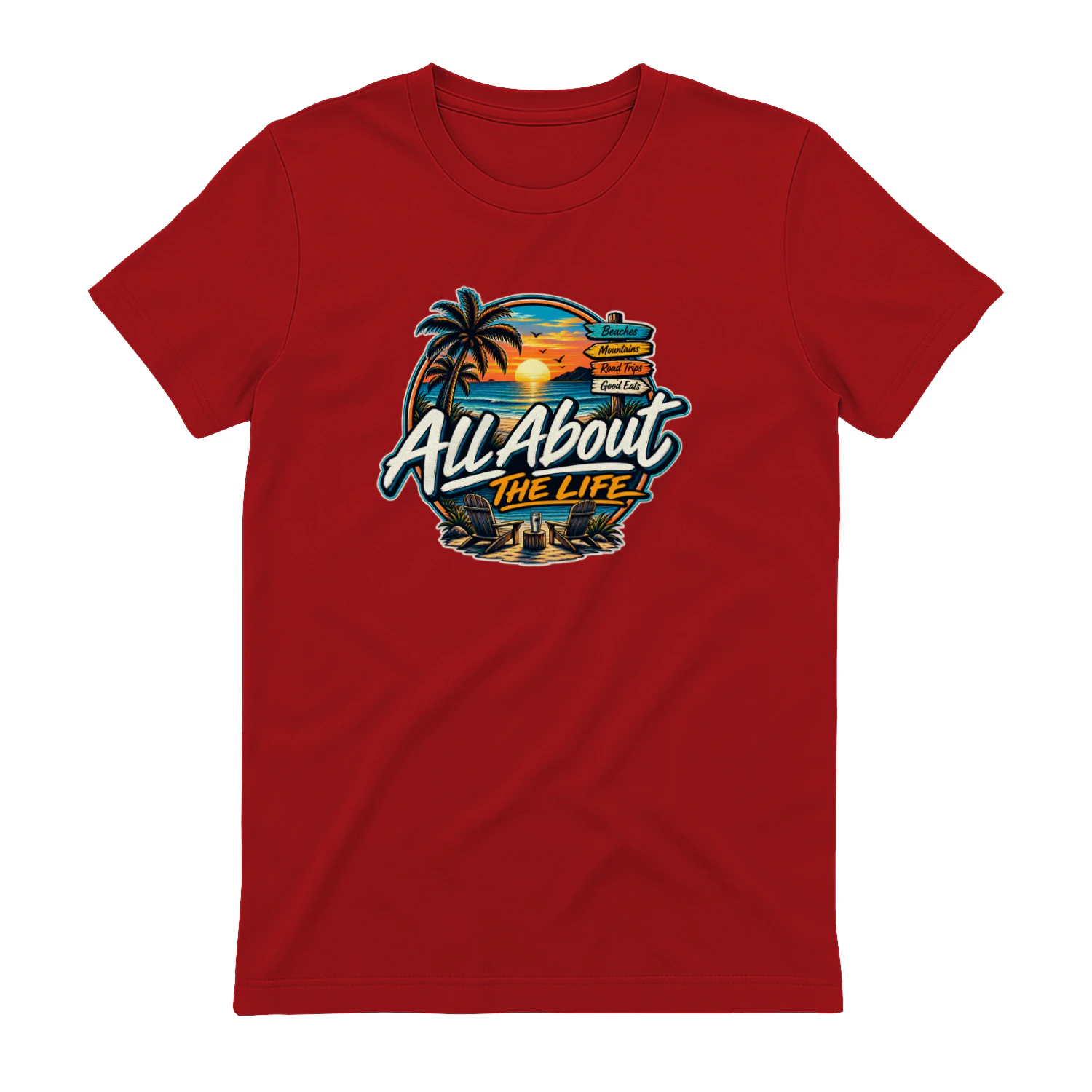
All About The Life Beach Signpost Badge
A tropical All About The Life travel badge featuring a glowing sunset, beach chairs, ocean scenery, and a signpost pointing toward Beaches, Mountains, Road Trips, and Good Eats. It’s a celebration of all the different ways to get out, explore, eat well, and enjoy the good life.