A build that finally starts to feel like a system
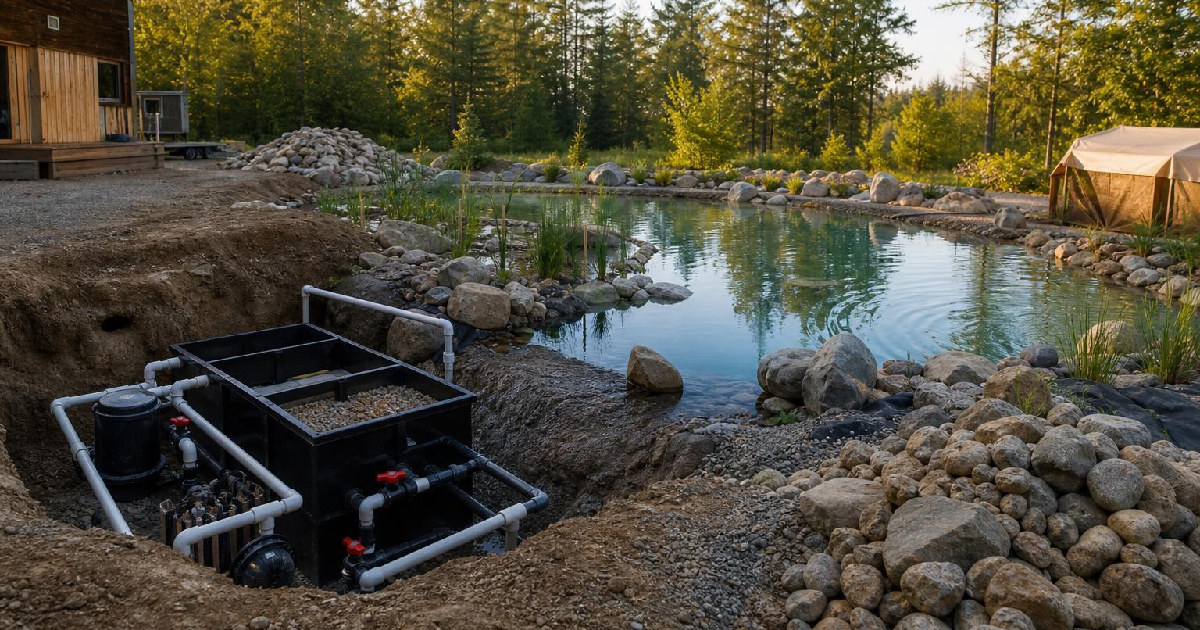
The clearest answer to what happens in this video is simple: the DIY swim pond build moves from big, visible earthwork into the less glamorous jobs that make a pond actually function. The concrete pad gets poured, trenches are started for plumbing, and the pond itself goes through a serious cleaning cycle before fresh water is brought back in. That is the real story here. This is no longer just a hole with stone around it; it is becoming a system.
That shift matters because the work shown in the video is the kind that often gets skipped over in construction updates, even though it is what decides whether the finished space works smoothly later. By the end of this episode, the swim pond looks less like a project under construction and more like a place that is being prepared to run, be maintained, and eventually be used.
The concrete pad changes the job
A big part of the update centers on the concrete pad for the pool shed, where the plumbing and equipment will live. The team spends time getting the base ready with gravel, soil, stakes, and rebar, with a clear emphasis on making the surface stable before the concrete truck arrives. The pad is treated as a serious foundation piece, not a side task.
The video makes a simple point that is easy to miss if you are only watching for the big reveal: a concrete pad can shift if the base is weak. That is why so much attention goes into compacting and getting the levels right. The crew also talks through how the stakes are set so they do not interfere with the pad later, which gives the whole sequence a very practical feel. Nothing about it is flashy, but all of it matters.
When the concrete does arrive, the pace changes fast. The pad goes in, the surface gets worked by hand, and the team uses magnesium floats to smooth it out. By mid-morning, the job that was still in preparation the day before is suddenly real. That quick transition is one of the most satisfying parts of the video: the project crosses from setup into something permanent.
Why the trenches matter before the pond can run
Once the pad is underway, the next major job is trenching. The trenches need to connect the skimmers and wetlands to the concrete pad, where the plumbing will eventually be organized. The team is careful not to rush this part, partly because not all the flex pipe is on site yet and partly because the route itself matters.
The conversation around the trenches is useful because it explains the logic of the build without pretending the job is simple. The lines need to run from the pond to the pad, but they also need to be protected. That is why the team keeps the trench close to the pond edge and avoids driving machinery over the flexible pipe area. The video also notes that, even though the pond will not be drained in winter, the filters, lines, and pumps will still be winterized. That helps explain why the trenching is being done with function in mind rather than just speed.
There is also a lot of real-world back and forth here: confirming plumbing runs, checking how much flex pipe is available, and making sure the route works before everything gets buried. It feels like the kind of construction conversation that only makes sense when you are actually on site, adjusting as you go.
Cleaning the pond is what makes the water usable
The cleanout sequence is where the video gets its strongest sense of transformation. After all the digging, stone placement, and rainwater buildup, the pond is full of debris, clay, and mud that has settled into the deep end and along the stone. The team drains what they can, then uses a trash pump and later a sump pump to remove the heavier water and muck.
This is not presented as a one-and-done cleanup. The video makes clear that the pond will likely need several rounds of washing before it is clean enough to refill properly. That detail gives the process its realism. The point is not to make the water look better for the camera; it is to keep all that dirt from going through the filters and pumps later.
What stands out here is how much the material itself changes the feel of the space. Once the clay and mud start coming out, the rock colors show through: blue, pink, beige, and other natural tones that had been hidden under the grime. The pond suddenly reads differently. It is still a work zone, but it starts to look like a designed landscape rather than a dirt pit waiting for the next step.
The first fill shows what this space is becoming
The second day brings in clean water, and that is when the build starts to feel emotionally finished even though there is still plenty left to do. Water is pumped back into the pond, and for a brief moment the team gets to see what the space will feel like once it is fully functional. The family is there too, which adds to the sense that this is becoming a gathering place, not just a construction project.
The video also gives a clearer picture of how the surrounding area will be used. The pad beside the pond is not just for equipment storage. It is being planned as part of the whole experience: room for pumps and filters, room for maintenance access, room for future furniture and floaties, and eventually even a lean-to to cover the area. That makes the build feel broader than a single pond. It is a water feature, utility zone, and hangout space all at once.
The practical side of the design is what makes it compelling. There is space for plumbing. There is space for maintenance. There is room to grow the system later if needed. And because the pond is meant to stay part of the property through winter and beyond, the structure around it matters just as much as the water itself.
What the pond build has proven so far
If you wanted the shortest possible read on this update, it would be this: the swim pond is entering the stage where patience and precision matter more than big machinery. The earthmoving phase is giving way to the system phase. The pad is in. The trenches are being planned and cut. The pond is being cleaned carefully enough to protect the filters and pumps. And the first refill suggests a space that is finally close to doing what it was always meant to do.
That is why this episode works as a companion to the video rather than just a recap of it. The most interesting part of the update is not one single moment. It is the way several essential steps happen at once and start pointing toward the same outcome: a natural swim pond that can be maintained, winterized, and eventually enjoyed.
Watch the original video: https://www.youtube.com/watch?v=v7bl1omqPYY
RECOMMENDATIONS
All About The Life designs from Texas Thread Theory, inspired by the places you go and the stories you bring back.

Take The Scenic Route
A scenic-route AATL design built for road trips, mountain drives, sunsets, back roads, and travelers who know the long way can be the best way.